
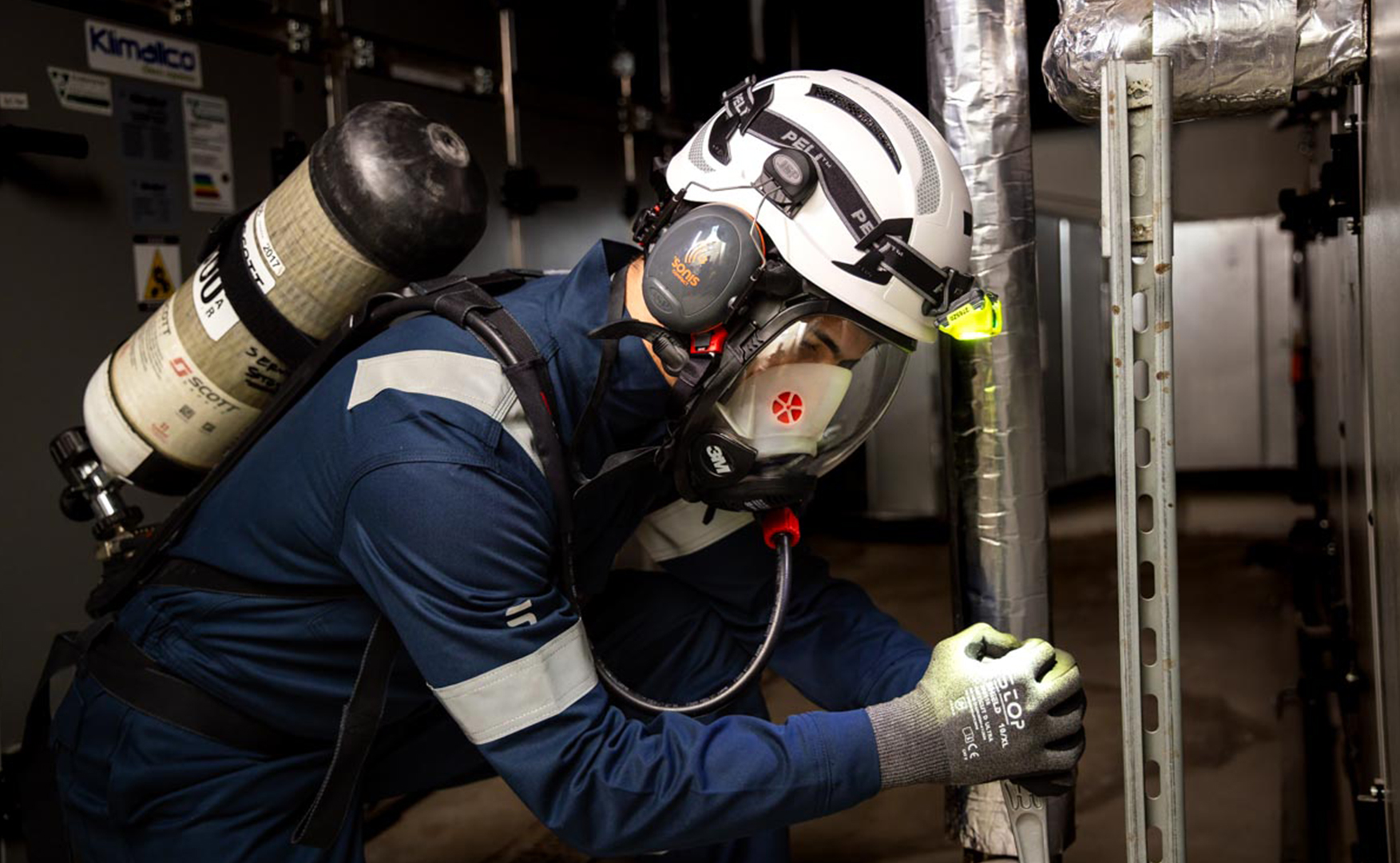
Seminar: Safe work in confined spaces
Working in confined spaces is one of the most hazardous activities in the workplace and requires specialised knowledge, proper preparation and strict adherence to safety procedures.
The STOP ACADEMY training course has been designed to provide participants with the theoretical knowledge and practical skills required for safe entry, working and exit from confined spaces, in accordance with applicable legislation and best practices.
Training Objectives
Upon completion of the course, participants will be able to:
- Identify what constitutes a confined space and recognise its main hazards.
- Understand the importance of risk assessment and hazard analysis under both normal and emergency conditions.
- Apply safe entry and working procedures (Permit to Work).
- Understand roles and responsibilities (Entrant – Attendant – Supervisor), as well as supervision and communication requirements.
- Correctly use gas detectors (bump testing, calibration and interpretation of readings) and apply proper atmospheric monitoring practices.
- Select and use appropriate Respiratory Protective Equipment (RPE), including SCBA, EEBD, filters and supplied-air systems, as well as basic personal protective equipment (PPE).
- Apply hazard isolation measures (LOTO), ventilation procedures and access control.
- Participate safely in emergency scenarios and apply basic rescue principles without creating a second casualty.
Course Content
Theoretical Training
- Definition and characteristics of confined spaces – examples (tanks, manholes, silos, pipelines, etc.).
- Legislation and compliance requirements – key employer and employee responsibilities.
- Accident statistics – common causes and critical mistakes.
- Hazard identification: mechanical, chemical, physical and biological hazards.
- Confined space atmosphere: oxygen deficiency, toxic and explosive gases, particulates – fundamental principles of atmospheric monitoring.
- Hierarchy of control measures – ventilation, isolation and access control.
- Permit to Work: permit requirements, pre-entry checklist and communication plan.
- Gas Detection: instrument selection, bump testing, calibration and record-keeping.
- Respiratory Protective Equipment (RPE): selection, limitations of use, fit testing, maintenance and storage – SCBA, EEBD, filters and supplied-air systems.
- Fall protection and fall arrest – fundamental principles and restraint systems.
- Emergency response and rescue: rescue hierarchy, roles and responsibilities, emergency activation and prevention of secondary casualties.
Practical Training
- Pre-use inspection of equipment.
- Use of gas detectors: bump testing, checking and interpreting readings, and basic record-keeping.
- Practical use of RPE: half-face and full-face respirators with filters, SCBA and EEBD (where applicable).
- Permit to Work scenario: completion of essential permit sections, pre-entry checklist, area demarcation and safety signage.
- Basic demonstration of safe rescue and retrieval techniques, depending on the available equipment and training facilities.
Course Structure & Duration
- Duration: 7 hours (1 day).
- Format: Theoretical and practical training.
- Language: Greek or English.
- Location: STOP ACADEMY training facilities or the client’s premises.
Certification
- Upon completion of the training, each participant receives an individual training certificate.
- Refresher training / recertification: Every 3 years, or as required by the specific facility.
Training Facility Requirements (for training at the client’s premises)
- A classroom equipped with presentation facilities, adequate lighting and access control.
- No conflicting activities or excessive noise levels.
- A suitable practical training area for safe simulations and demonstrations, subject to prior agreement.
Who Is This Course For?
- Employees working in industrial facilities, energy, water supply and wastewater management, and construction.
- Technical and maintenance personnel.
- Occupational Health & Safety (HSE) professionals.
- Site supervisors and work supervisors.
- Attendants and supervisors involved in confined space operations.
Register your interest in attending the training course by contacting us at [email protected] or by calling +30 210 4626800.