
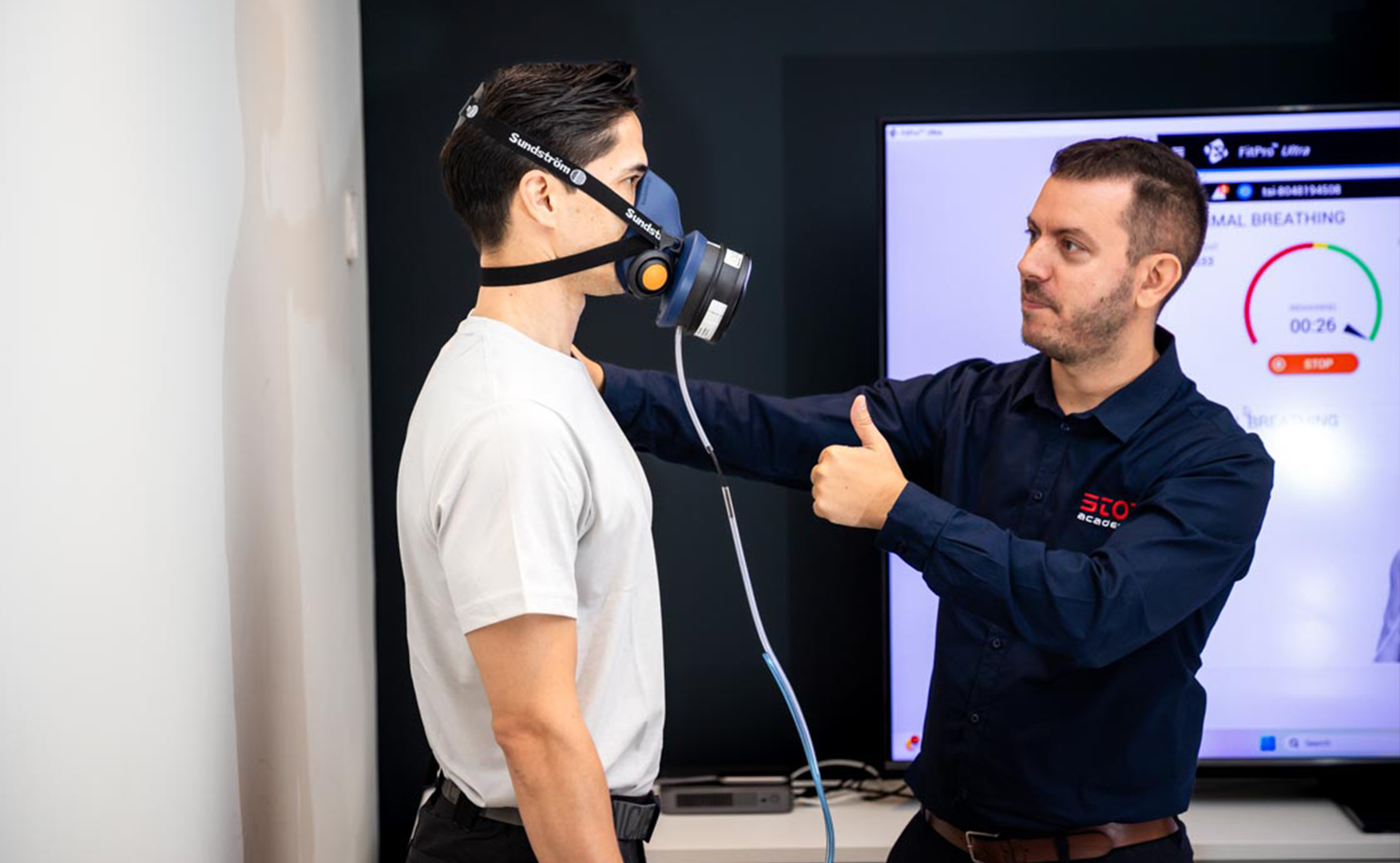
Service: Respiratory Fit Test (RPE Fit Test)
STOP provides a certified Fit Testing service for tight-fitting respiratory protective equipment (RPE), ensuring that the specific mask model and size fits the user’s face correctly and provides the required level of protection.
The procedure is carried out by certified Fit Test Providers, in accordance with established international guidelines (e.g. HSE guidance) and standardized testing procedures.
What Is a Fit Test?
A Fit Test is a procedure that determines whether a specific tight-fitting respirator provides an adequate seal against the user’s face (face seal).
Since facial shape and size vary significantly from person to person, a particular respirator model will not necessarily fit everyone. An inadequate fit can drastically reduce protection and may result in exposure to hazardous substances.
Note: A user seal check, which must be performed by the wearer before each use, is essential but does not replace a Fit Test.
STOP’s Testing Method and Equipment
-
Quantitative Fit Testing (QNFT): Provides a numerical result (Fit Factor) indicating how effectively the respirator seals against the face. It is an objective measurement method and is suitable for both half-face and full-face respirators. One indicative method is Ambient Particle Counting (APC).
Equipment used by STOP: TSI PortaCount 8048.
User Preparation Before the Fit Test
To ensure reliable results, the following basic preparation requirements must be met:
- Clean-shaven face: Facial hair, including beards, moustaches and stubble, can interfere with the respirator’s seal. Users must be clean-shaven on the day of testing, using a razor (not just trimming), in all areas where the respirator comes into contact with the face.
- Make-up: Female employees should avoid using make-up or other cosmetic products that may interfere with the respirator’s seal.
- Food and drink restrictions: Avoid eating, drinking anything other than water, or chewing gum for at least 30 minutes before the test.
- Smoking: Users must refrain from smoking, including the use of electronic cigarettes, for at least 60 minutes before the test.
- Medical fitness: Please ensure that the individual is medically fit to wear the respirator and perform the exercises required during the test.
Why Is Fit Testing Essential?
- Ensures the correct fit and adequate sealing of the respirator.
- Reduces the risk of occupational exposure to hazardous substances.
- Supports compliance during audits and inspections.
What Does the Service Include?
- Quantitative Fit Testing (QNFT – APC).
- Fit testing for half-face and full-face respirators.
- Testing under simulated real-world wearing conditions.
- Issuance of a Fit Test certificate.
- Guidance on correct use and retesting requirements.
When Is Retesting Required?
- When changing the respirator model or size.
- Following changes in facial characteristics (e.g. weight changes, facial hair or dental procedures).
- At regular intervals (good practice: every 2 years).
- Following significant changes to the face around the sealing area (e.g. scars, moles or age-related changes).
- When introducing or changing other PPE worn on the head that may affect the respirator’s fit (e.g. safety glasses, helmets, earplugs or earmuffs).
- Following facial piercings or other modifications in the sealing area that may compromise the respirator’s seal.
Who Is This Service For?
- Industrial facilities and technical projects.
- Work involving dust, chemicals, fumes and gases.
- Confined space operations.
- Maintenance and emergency response teams.
Request a quotation for our Respirator Fit Testing service by contacting us at [email protected] or by calling +30 210 4626800.