
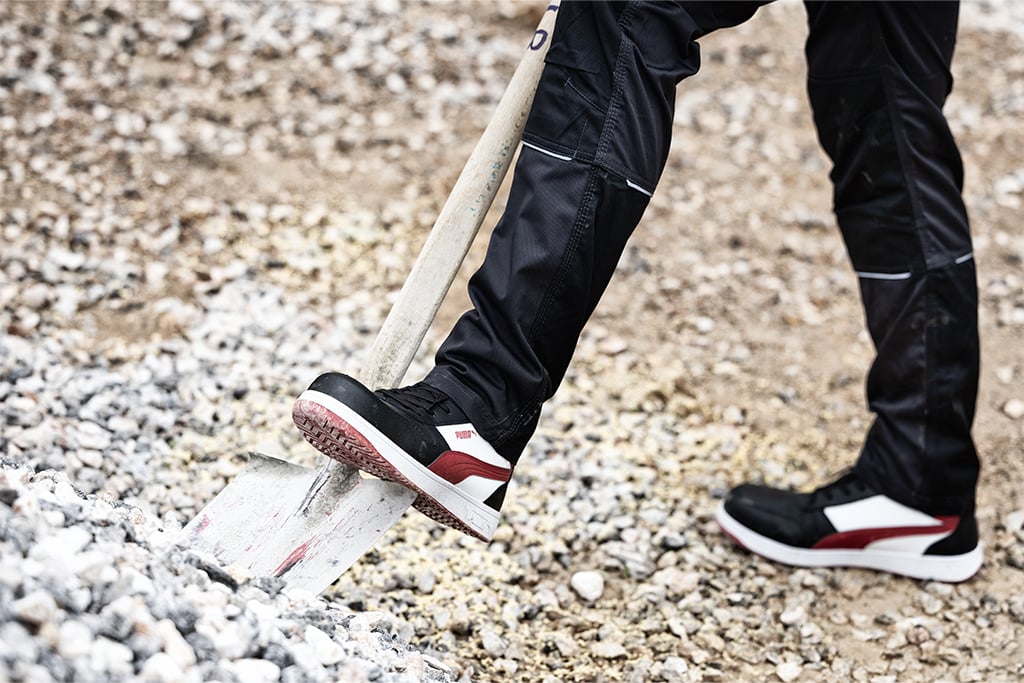
When You’re on Your Feet All Day, the Right Pair of Shoes Is a Necessity—Not a Luxury
Low safety shoes combine the protection you need with the comfort you want—without the bulk of traditional high-top boots. They’re ideal for professionals who value mobility, breathability, and all-day support.
But how do you choose the right pair for your job? Not all safety shoes are created equal, and definitely not all of them are suitable for every type of work.
What Do Safety Ratings Like S1P, S2, and S3 Mean?
If you’ve ever felt lost seeing codes like S1P, S2, or S3, don’t worry—it’s actually simpler than it looks. These categories refer to the level of protection offered by each type of safety shoe:
S1P: Ideal for indoor work or light industrial tasks. These shoes offer toe protection, a slip-resistant sole, and puncture resistance.
S2: Includes everything from S1P, plus added resistance to moisture. Perfect for workplaces where you’re exposed to water or other liquids.
S3: The heavy-duty option. Designed for outdoor use, S3 shoes provide protection against water, mud, punctures, and feature a tougher, more durable sole.
Find the perfect pair of work shoes for you
Every professional has different needs — that’s why choosing the right pair of work shoes is never a one-size-fits-all decision.
Whether you’re renovating your space with a challenging (but rewarding) DIY project, or working long hours on a demanding construction site, you’ll find the perfect pair to support you at stop.gr — shoes designed to match your job, your environment, and your comfort.
For example, if you’re looking for something lightweight, breathable, and flexible, the Reebok Trail Running Work Shoe (S1P) is a great choice. It looks and feels like a running shoe but delivers the safety features you need at work. Ideal for professionals who value mobility and breathability on the job.
On the other hand, if your work environment is more demanding, the HAIX Eagle Safety Pro (S3) offers maximum protection with a waterproof GORE-TEX® lining and cut-resistant design — all without any metal components.
For more specialized needs — such as in the healthcare or food industry — features like antibacterial lining may be critical. In such cases, shoes like the Robusta Nogal (S2) are likely your best option, designed to meet hygiene and safety standards in sensitive environments.
What to Consider Before Choosing the Right Pair of Work Shoes
Before you choose your next pair of safety footwear, it’s important to consider your specific work environment and personal needs. Here are some key questions to guide your decision:
- What kind of environment do you work in?
(Indoor or outdoor? Wet areas? Uneven terrain?) - Do you need waterproof protection or breathability?
Waterproof shoes are ideal for wet or muddy conditions, while breathable models help keep your feet cool in hot environments. - Is it important that the shoes are metal-free?
(For example, if you work near metal detectors or in environments with electrical hazards.) - How many hours will you be wearing them?
If you’re on your feet all day, prioritize comfort features like shock absorption and ergonomic design. - Is there a risk of slipping?
Then you’ll need slip-resistant soles with SRC certification for maximum grip and workplace safety.
With this quick checklist, you’ll find it easier to choose the pair of low safety shoes that truly fits your needs — and make a purchase that supports you every step of the way.
Don’t Compromise on Comfort
Comfort and safety are not things to leave to chance.
The right pair of work shoes can make all the difference between a tiring, stressful day and a productive, pain-free one. With proper support, you’ll avoid discomfort and reduce the risk of injury.
Choose based on your real working conditions, pay attention to the details, and remember:
When your feet are protected and comfortable, you can focus on what really matters.
Explore the pair that will support you — every single day.